Progress — 10%
How can a trach help me?
Your ALS care team may recommend a trach if you have progressive respiratory failure or bulbar disease. If you have one of these conditions, other treatment options like non-invasive ventilation (NIV) may not provide enough support to help you breathe.
Here’s how a trach can help people living with ALS:
- The trach bypasses the nose, mouth, and vocal cords, so air doesn’t have to go through all those parts of the body to get into your lungs, making it easier for you to breathe.
- Some trachs have a cuff, or inflatable balloon, at the end, which may help prevent materials like food, liquids, or saliva from getting into your lungs by mistake.
- A trach provides access to your lungs, so that a doctor or caregiver can suction them clean regularly using an airway clearing device. Suctioning helps to remove secretions from your lungs and make it easier to breathe.
Most people living with ALS who use a trach have a ventilator connected to their trach. This is called invasive mechanical ventilation (IMV). A ventilator can help you to breathe in oxygen and breathe out carbon dioxide in the appropriate amounts. This is important because having too much carbon dioxide in your body can cause you to have a headache and feel very tired — and over time, it can lead to serious health problems.
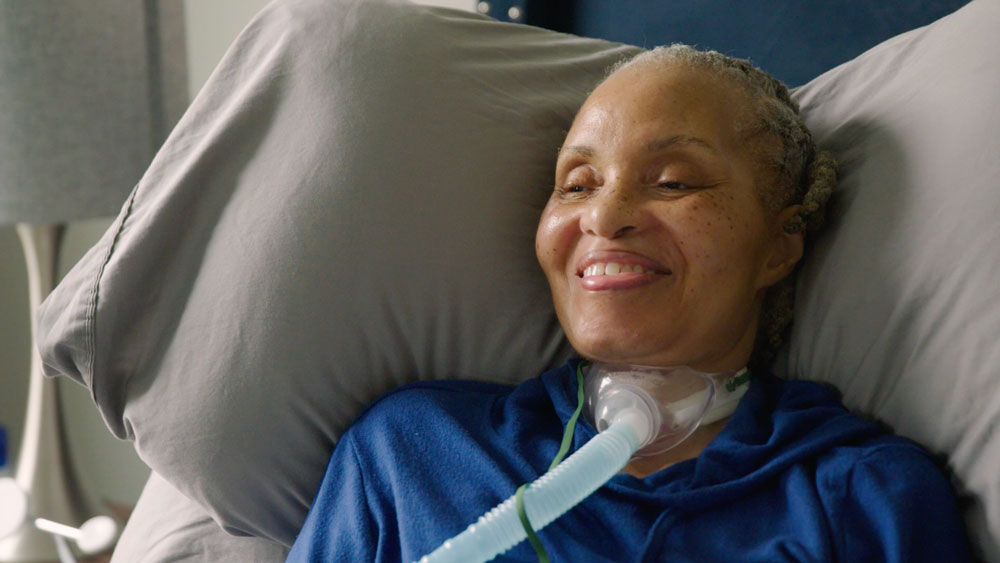
It’s important to understand that while using a trach and IMV can help you live longer, it cannot stop ALS from progressing. That means using a trach and IMV will not stop your ALS symptoms from getting worse.
