Progress — 29%
Getting a trach
Here’s what to expect if you choose to get a trach.
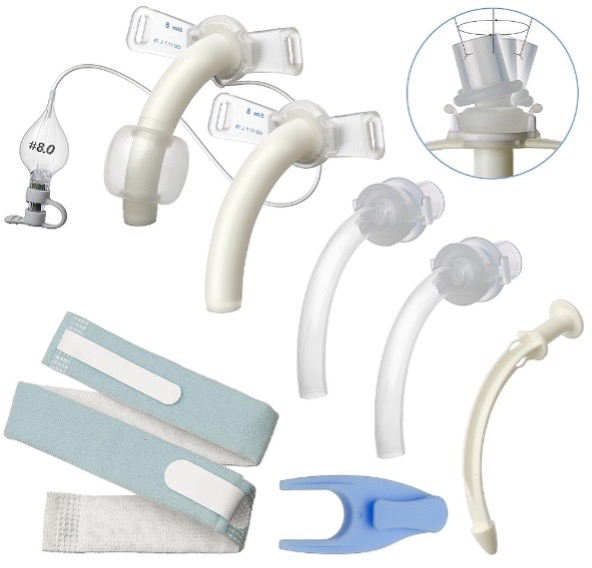
There are many types of trachs. Some are made of soft silicone material and others are made of hard plastic. Some have an inner cannula (thin tube) that you can take off, and some have a cuff (inflatable balloon) at the end. The cuff may help to prevent food, saliva, and other liquids from getting into your lungs. Your care team will recommend a trach for you based on your ALS symptoms.
Then, you will have surgery to place the trach in your trachea (windpipe). The procedure takes about 30 minutes. The surgery team will use anesthesia to put you to sleep, so you won’t feel anything. Then, they will insert the trach through an opening near the bottom of your neck. This opening is called a stoma.
Your care team will decide how long you need to stay in the hospital based on your personal health situation. If you experience complications (health problems related to the surgery), you may need to stay in the hospital longer. Check in with your care team about what to expect and how to get ready for surgery.
If you get a trach, it’s very likely that you will also need to have a ventilator connected to your trach. This is called invasive mechanical ventilation (IMV).
There are some rare situations where people living with ALS might use a trach without using IMV, or vice versa. Your ALS care team will recommend a treatment plan for you based on your medical needs.