From a team of three to a growing force: Special Agent Marshman returns
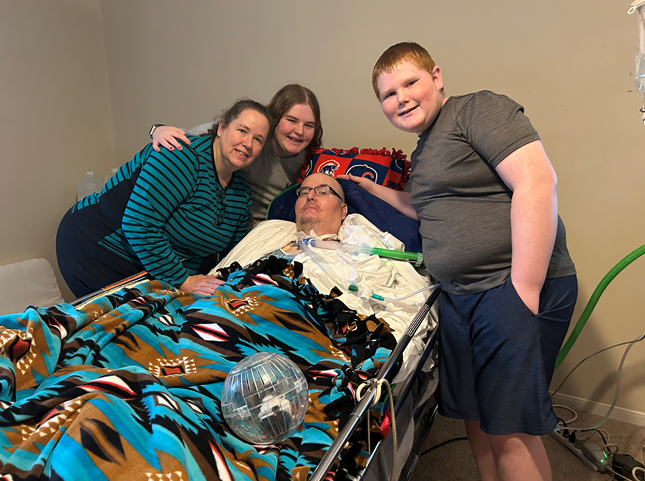
When Cliff Marshman was diagnosed with ALS in September 2024, the very next day was the ALS Walk for Life. His wife knew she had to do something to empower their children. “My answer was to stand up with them and do the walk,” she says. It was just the three of them — mother, daughter, and son. Cliff passed away ten months later, and by the next year, the team had grown from three to fifteen. They were walking in memory of him.
Now called Special Agent Marshman — a nod to Cliff’s 24-year career in government — the team continues to grow with family and friends joining each year. “What drives me is that if I do nothing, ALS wins,” she says. “And I refuse to let ALS win.”
This year marks their third Walk. A favorite memory? Walking inside Soldier Field last year, when the excitement of the crowd helped them let go and have fun on a day that can also brings feelings of sadness.
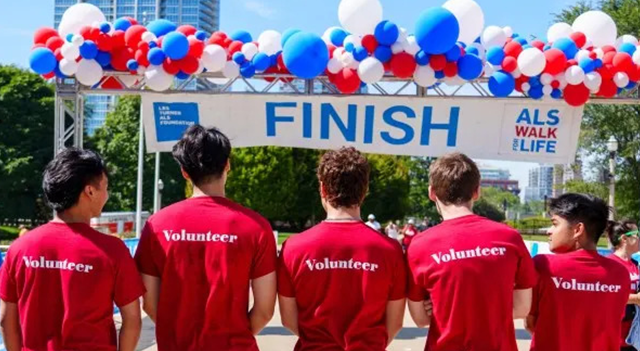
Calling all ALS Walk for Life volunteers!
Volunteers are a critical piece of the ALS Walk for Life, and we need you to help make this year’s event unforgettable. Join us Saturday, October 24 at Soldier Field and play an essential role in creating a welcoming, meaningful experience for participants, families, and supporters as we come together to honor those affected by ALS.
Whether you’re helping with event setup, registration, route support, or other day-of activities, your time and dedication make a lasting impact. No experience is necessary — just a willingness to show up and make a difference.
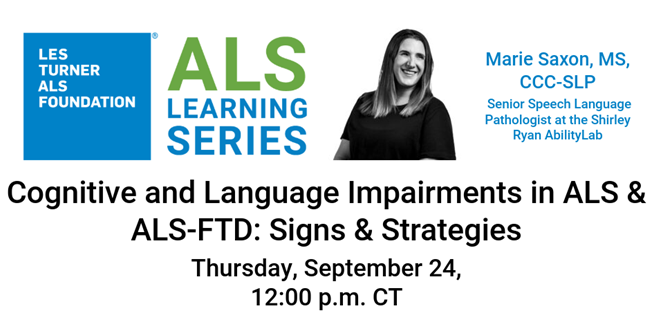
Join us Thursday, September 24, at 12 p.m. CT for our next ALS Learning Series webinar: Cognitive and Language Impairments in ALS & ALS-FTD: Signs & Strategies.
Marie Saxon, MS, CCC-SLP, a senior speech language pathologist at the Shirley Ryan AbilityLab, will lead this one-hour session reviewing the most commonly observed cognitive and language symptoms in ALS and FTD. She’ll explore how reduced executive functioning, attention, memory, and social cognition can impact decision-making, safety, and interpersonal connection — and share practical strategies and tools you can use now to support independence and participation in meaningful activities.
A live Q&A with Marie will follow the presentation — your questions are welcome.
The Les Turner ALS Foundation is proud to offer this webinar at no cost to the ALS community. Thank you to Biogen & Shionogi for sponsoring this webinar.

Guide Spotlight: ALS & Nutrition
Good nutrition and hydration are essential for people living with ALS, who burn more calories at rest due to the increased energy used in breathing, moving, and muscle twitching. Our ALS & Nutrition guide helps you proactively manage weight, energy, and strength, with practical strategies for adding calories without adding volume, identifying swallowing difficulties, and staying properly hydrated.
This resource covers everything from soft food preparation and thickening techniques to adaptive eating aids and choking prevention. It also explains how feeding tubes work, when to consider one, and what to expect from the procedure and daily care. With input from your ALS care team and guidance from our Support Services team, you’ll have the tools to make informed decisions about your nutritional care.
Read the ALS & Nutrition guide here, available in both English and Spanish.
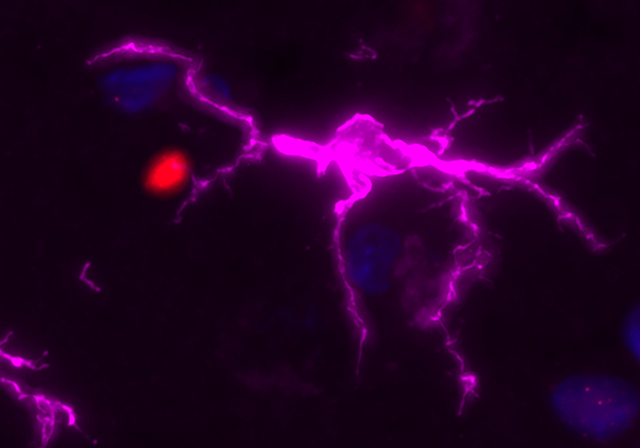
ICYMI: Connecting the immune system to ALS to develop new therapies
New research from the Les Turner ALS Center at Northwestern Medicine is shedding light on the immune system’s role in ALS. Dr. David Gate and his team sequenced immune cells from blood and spinal cord tissue of ALS patients and found them in an “activated state” — inflamed in both places. The inflammation was especially pronounced near toxic TDP-43 protein buildup, a hallmark of the disease, and higher in patients with faster progression.
“We don’t think the immune system causes the disease, but we think it makes it worse,” Gate says. “A therapy that helps mitigate the inflammatory response should help ALS patients.”

In Our Thoughts
We offer our sincere condolences to all those who have lost a loved one to ALS. Today, and every day, we honor and remember them.
Carol Young
Support ALS Care and Research
The Les Turner ALS Foundation exists to care for those affected by the disease, answer their questions, support them and their loved ones, and provide hope through scientific research at the Les Turner ALS Center at Northwestern Medicine.
Please make a gift so we can continue to deliver that care and support. Together, we will create a world free of ALS.

Get Involved
Cognitive and Language Impairments in ALS & ALS-FTD: Signs & Strategies
Sept. 24
YCare Youth Education Day
Oct. 3
Oct. 24
All in for ALS Casino Night
Nov. 14
Support Groups
Navigating ALS Together
1st Monday Group: 2 – 3 p.m.
2nd Saturday Group: 10:30 a.m. – 12 p.m.
4th Saturday Group: 10:30 – 11:30 a.m.
ALS Caregivers
1st Monday Group: 3:30 – 4:30 p.m.
3rd Thursday Group: 3:30 – 4:30 p.m.
3rd Thursday Group: 7 – 8 p.m.
Living After Loss
4th Monday: 6 – 7:30 p.m.
Moving Forward After Loss – Partner Bereavement Group
Spring Session begins May 5
6 – 7:30 p.m.
Newly Diagnosed
1st Tuesday: 6 – 7 p.m.
Young Adult Support Group
3rd Tuesday: 7 – 8:30 p.m.

