October 30, 2026
| The Honorable Ted Cruz, Chairman Committee on Commerce, Science, & Transportation United States Senate Washington, D.C. 20510 |
The Honorable Maria Cantwell, Ranking Member Committee on Commerce, Science, & Transportation United States Senate Washington, D.C. 20510 |
| The Honorable Sam Graves, Chairman Committee on Transportation & Infrastructure United States House of Representatives Washington, D.C. 20515 |
The Honorable Rick Larsen, Ranking Member Committee on Transportation & Infrastructure United States House of Representatives Washington, D.C. 20515 |
Re: Neuromuscular Disease Community Support for the Air Carrier Access Amendments Act (H.R. 9373/S. 4829)
Dear Chairmen Cruz and Graves and Ranking Members Cantwell and Larsen:
As organizations deeply invested in the safety and independence of the neuromuscular disease community, we write to express our strong support for the Air Carrier Access Amendments Act (ACAAA), which would strengthen enforcement of the Air Carrier Access Act and improve air travel safety and dignity for passengers with disabilities.
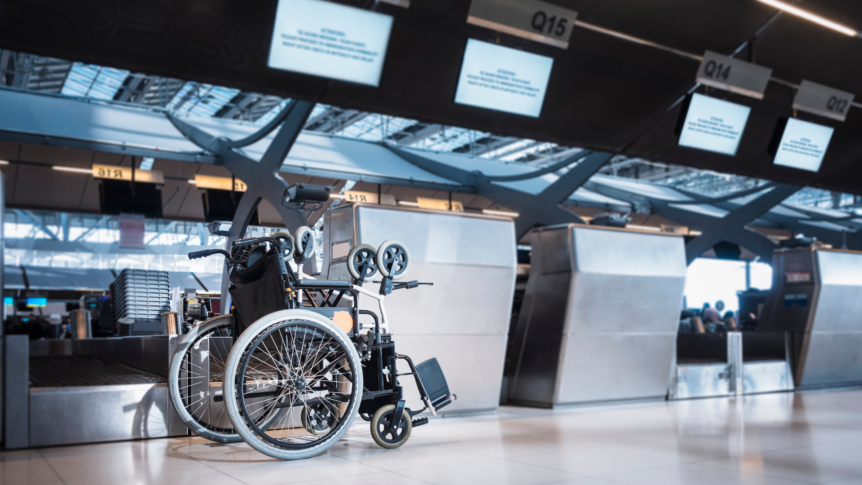
Neuromuscular diseases feature progressive muscle weakening. As these diseases progress, clinicians often recommend and prescribe medical equipment to increase independence and improve quality of life, including wheelchairs and other mobility devices, which provide vital trunk and spine support, curvature support, and can accommodate assistive technology to help with speech, breathing, and other vital functions. Wheelchairs do not simply provide a means of transportation; these devices are sophisticated, highly customized therapeutic devices which many view as extensions of their own bodies. As such, air travelers in the neuromuscular disease community must have access to prompt, safe, and dignified assistance, and adequate remedies when this essential equipment is damaged during air travel.
Forty years ago this month, the Air Carrier Access Act (ACAA) was signed into law by President Ronald Reagan, intended to prohibit disability discrimination in air travel. Before the ACAA, passengers with disabilities were often denied service or could be required to travel with a companion at their own expense, solely because of their disability. With passage of the ACAA and ensuing regulations1, travelers impacted by neuromuscular disabilities have benefited from specific standards related to accessibility, passenger assistance, service animals, and more.
Disability provisions in the FAA Reauthorization Act of 2024 (Act)2 and in the ensuing December 2024 final rule entitled, ‘Ensuring Safe Accommodations for Air Travelers with Disabilities Using Wheelchairs’ bolstered protections following sustained advocacy from the neuromuscular disability community. The final rule made several significant improvements, including clarifying that safe, dignified, and prompt assistance is required when providing necessary accommodations; requiring passenger notifications about the status of their mobility devices; and enhanced training requirements for airline personnel and contractors providing assistance or stowing devices, among other provisions.
While this progress is encouraging, passengers with neuromuscular diseases who use mobility devices continue to face dangerous and discriminatory barriers to traveling by air, including unsafe assistance boarding and deplaning, injury during transfers and damaged devices. To make matters worse, members of the neuromuscular disease community lack adequate opportunities for redress when their rights are violated. Administrative remedies continue to be woefully inadequate given the risks to health and safety when the law is violated. Unlike other modes of transportation governed by the Americans with Disabilities Act (ADA), members of the neuromuscular disease community cannot enforce their rights in court under the ACAA, as it does not expressly provide for a private right of action. Because of this, the neuromuscular disease community must instead rely on the Department of Transportation (DOT) to take corrective action. It is past time to establish a private right of action under the ACAA to empower the neuromuscular disease community to exercise their rights.
This is why the undersigned organizations are proud to support the Air Carrier Access Amendments Act, vital legislation to make air travel safer for the neuromuscular disease and broader disability community. The legislation (H.R. 9373/S. 4829) would expand the remedies for passengers who experience ACAA violations by granting a private right of action under the ACAA, requiring patterns of discrimination to be referred to the Department of Justice for further enforcement, and requiring civil penalties for wheelchair mishandlings; physical harm or fatal injury; failure to provide proper assistance; and gross negligence, among other violations.
We thank you for considering the needs of passengers affected by neuromuscular conditions and urge you to support and advance this necessary legislation. For questions regarding this letter or our perspectives regarding accessible air travel, please contact Shannon Wood, Director of Disability Policy at the Muscular Dystrophy Association at swood@mdausa.org.
Sincerely,