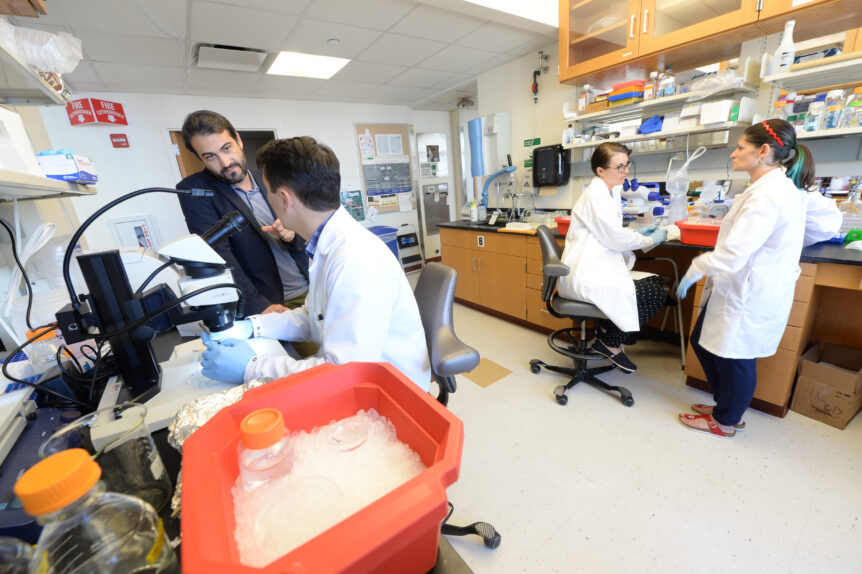
Digging deep into the molecular mechanisms behind ALS, researchers at the Les Turner ALS Center at Northwestern Medicine have discovered why nerve cells overfire in the disease.
Not only that—they have also designed a new drug to stop this overfiring, which could potentially slow or stop the disease from progressing.
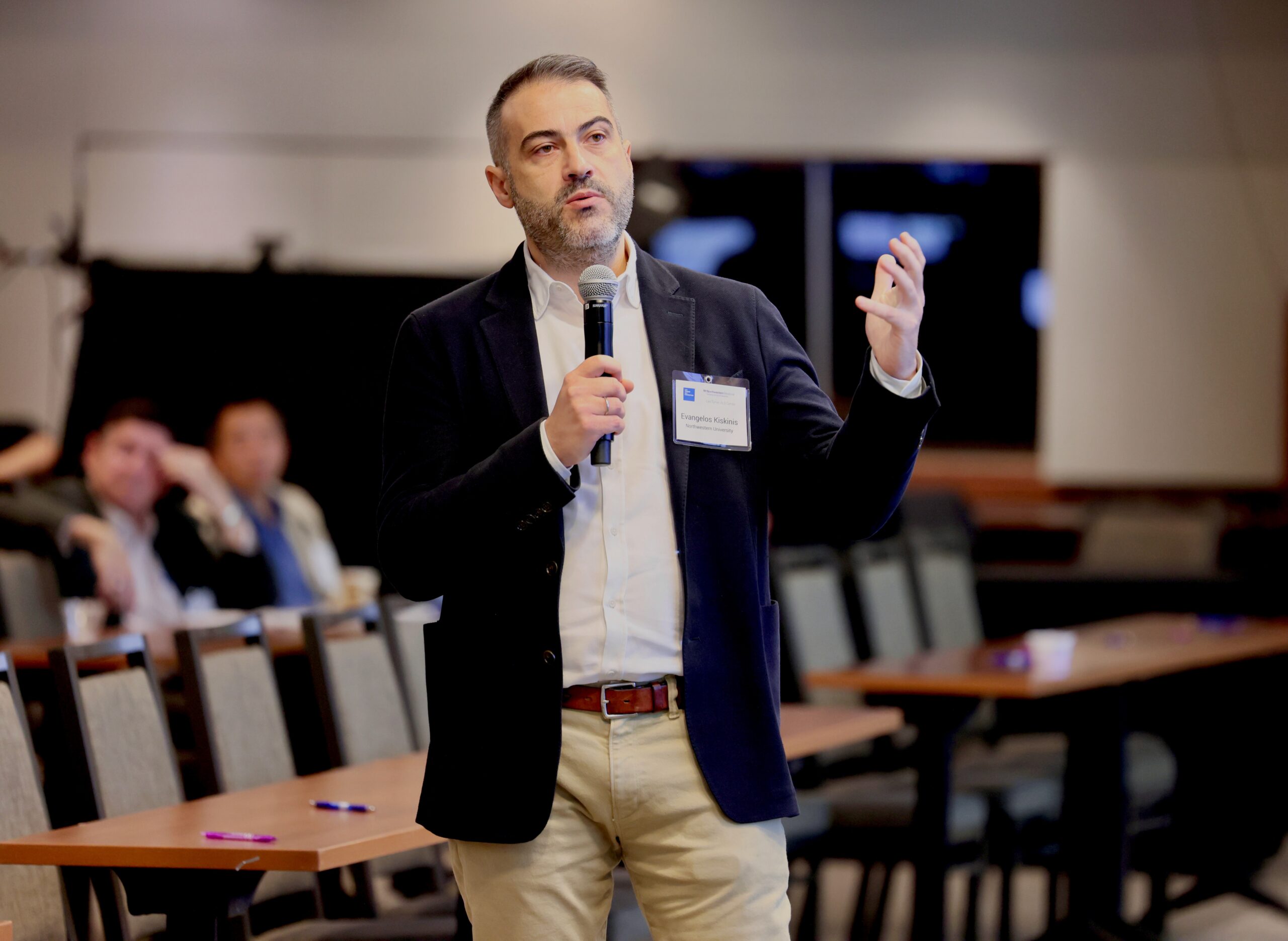 “If we figure out the cause and we get the mechanism right, we can actually treat the disease,” said Evangelos Kiskinis, associate professor of neurology and neuroscience at Northwestern University’s Feinberg School of Medicine who led the research.
Using patient nervous tissue and lab-grown human neurons—which he develops from stem cells, a process that has been funded by the Les Turner ALS Foundation—Kiskinis has focused his research on the protein TDP-43.
In ALS patients, this protein moves from its normal cellular location and disrupts cellular function. “We believe that understanding the functional process of TDP-43 pathology is the key to understanding what happens in sporadic ALS,” he said. Sporadic ALS accounts for the vast majority of cases of the disease.
When Kiskinis and his team manipulated the expression of TDP-43, they found that it caused several defects associated with a neuron’s ability to fire and communicate.
They discovered that TDP-43 affects an ion channel that acts as a brake for brain cells—when there is too much firing, the ion channel regulates it and slows it down. But many ALS patients show hyperexcitability in their brain cells. Kiskinis believes that the TDP-43 causes this hyperexcitability by affecting the ion channel.
Not only has the research uncovered the explanation for this hyperexcitability, it has also led Kiskinis and his team to design a drug that could stop it.
The drug is a new type of therapeutic called an antisense oligonucleotide. A similar drug is used to treat spinal muscular atrophy and has been shown to substantially slow neurodegeneration. These types of drugs work by identifying and binding to a specific, defective RNA molecule in cells, then working to correct it.
“We discovered that the RNA, which makes this ion channel break, is defective because it is regulated by TDP-43,” Kiskinis said. “So this type of therapy makes perfect sense to treat it.”
The team is currently planning pre-clinical studies, including safety studies in animal models, and hopes to advance it to clinical trials in humans soon.
“We hope to establish a platform that would allow us to test this molecule on patients at Northwestern,” he said.
Robert Kalb, director of the Les Turner ALS Center at Northwestern Medicine, said this far-reaching and comprehensive study links several enigmatic aspects of motor neuron disease: the electrical excitability of neurons, TDP-43 pathology, and the rate of ALS progression in patients.
“Remarkably, preventing the generation of the abnormal ion channel with antisense oligonucleotides blunts this pathology,” he said. “Together, this mechanistic work suggests a novel therapeutic avenue for future interrogations.”
Research like this is possible because Kiskinis and his team are building innovative cellular models by pooling together stem cell lines derived from multiple ALS patients. The eventual goal is to gather hundreds of stem cells from people living with sporadic ALS to find even more opportunities for treatments to stop the disease from progressing.
Current ALS drugs are showing positive results, but they are designed to treat only the genetic version of the disease. Kiskinis hopes that this new therapy could finally help push the field to finding ways to treat sporadic ALS.
“Within this decade, we’re going to see transformative changes in the way we treat ALS patients,” he said. “I remain incredibly hopeful.”
