More than 15 years ago, Northwestern University professor Richard Silverman set out to discover a small molecule compound that could prevent toxic protein aggregation in the brain. From that journey came NU-9, a drug that prevents the aggregation of the …
Researchers discover cause of neuron excitability in ALS, leading to new potential treatment
Digging deep into the molecular mechanisms behind ALS, researchers at the Les Turner ALS Center at Northwestern Medicine have discovered why nerve cells overfire in the disease. Not only that—they have also designed a new drug to stop this overfiring, …
ALS is driven by a domino‑like chain reaction that begins in nerve cells
Study links TDP‑43 pathology to inflammation, disease progression and survival across ALS subtypes. Study used cutting-edge techniques to analyze blood, spinal cord samples from hundreds of patients Immune signatures differ by ALS type (genetic or non-genetic), disease stage, speed of …
Clinical trials test potential new gene therapies for inherited ALS
As director of the clinical research program at the Les Turner ALS Center at Northwestern Medicine, Senda Ajroud-Driss has seen her share of potential ALS therapies. Though many drugs have not made it past clinical trials, recent advances have given …
Looking at bridges between neurons for clues to ALS
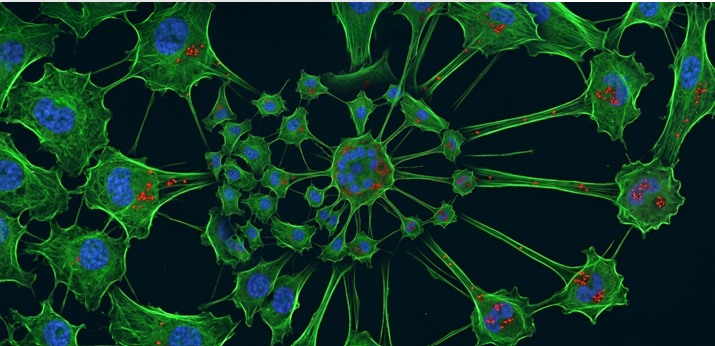
To understand neurodegenerative diseases like ALS, researchers are looking beyond individual neurons and examining tiny bridges that connect neurons to other neurons. These bridges, called tunneling nanotubes (TNTs), shuttle molecules and proteins between cells, including small structures with specific functions …
Searching for the cause of ALS, researchers look to metabolism within cells
One distinct hallmark of ALS is the dysfunction of a tiny protein called TDP-43. This protein normally lives within a cell’s nucleus, but in the case of ALS, it becomes dysfunctional, migrates out, and aggregates into the cell’s cytoplasm. The …
Discovering how motor neurons break down in ALS
In the search for the underlying mechanisms of ALS, researchers are examining the role of even the tiniest parts of neuron cells. In fact, studies have shown that in ALS patients, microtubules—which are the major component of the cell cytoskeleton …
Les Turner ALS Center at Northwestern Medicine and Sean M. Healey & AMG Center for ALS Establish Acceleration Centers of Enrollment Initiative
Together with the Sean M. Healey & AMG Center for ALS at Massachusetts General Hospital, the Les Turner ALS Center at Northwestern Medicine is thrilled to announce the launch of the Acceleration Centers of Enrollment (ACE) initiative. The ACE initiative …
‘New’ ALS gene destabilizes neuron’s structure and chokes off its nucleus
As many as 2% of all ALS cases have been linked to mutations in the gene NEK1, making it one of the top-known causes of the disease. But it wasn’t known how the mutated gene disrupts the function of the …
New results show promise in treatment of SOD1-ALS
New results from the Phase 3 clinical trial of tofersen, a drug in development by Biogen, have shown promise in treatment of superoxide dismutase 1 (SOD1) amyotrophic lateral sclerosis (ALS). According to the 12-month data, earlier initiation of treatment with …
- Page 1 of 2
- 1
- 2