More than 15 years ago, Northwestern University professor Richard Silverman set out to discover a small molecule compound that could prevent toxic protein aggregation in the brain.
From that journey came NU-9, a drug that prevents the aggregation of the toxic mutant SOD1 and TDP-43 proteins in the brain. Because these proteins aggregate in ALS, the drug helps protect against ALS in animal models. Not only that, NU-9 was also shown to improve upper motor neuron health.
In 2024, the drug received clearance from the U.S. Food and Drug Administration to begin human clinical trials for ALS. But before those trials could be funded, Silverman and his team needed to better understand the exact molecular target in the body that the compound modifies.
With funding from the Les Turner ALS Foundation, Silverman and research associate Pedro Soares set out to do just that.
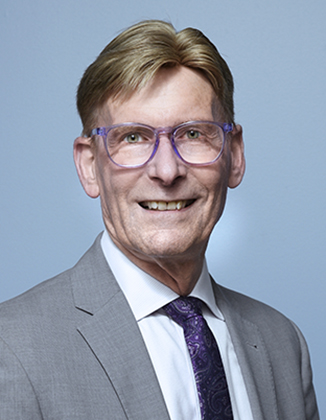 “It’s ready to go to clinical trials for ALS, but investors want know exactly how the drug works,” said Silverman, the Patrick G. Ryan/Aon Professor in the Department of Chemistry within the Les Turner ALS Center at Northwestern Medicine. “And with this funding, we’re almost ready to show them how this is different from every other drug.”
Silverman’s team knew that NU-9 influenced protein aggregates, but with this grant, they discovered that the drug didn’t prevent aggregates from forming—it simply got rid of them before they could cause the damage that leads to ALS.
Using advanced laboratory techniques to study the proteins within a cell, Soares found that NU-9 selectively enhances autophagy. This biological process is responsible for the degradation and recycling of cellular contents through lysosomal degradation, including defective or aggregated proteins associated with ALS.
Though they have not yet found the exact target of the drug, they believe they are close. Now, they are focusing on specific proteins that control autophagic flux as the potential target. “Cell biology is very complex, so it will be easier now that we have narrowed it down to find the exact trigger of how this compound starts the process to activate the cell to get rid of these bad proteins,” Soares said.
“The funding from Les Turner really got us moving in the right direction,” Silverman said.
“The very exciting linkage of NU-9 to autophagy provides a potential mechanism of action for the drug and we are hopeful that this approach will have therapeutic virtue for our patient population,” said Robert Kalb, MD, director of the Les Turner ALS Center at Northwestern Medicine.
If human clinical trials show the same results as those performed in animal models, the compound could offer hope to ALS patients and their families by targeting the disease before it destroys neurons. NU-9 has also shown promising results in halting the progression of Alzheimer’s disease, which means it could provide hope to patients and families affected by two devastating neurodegenerative diseases.
“We work on this not because we want fame or fortune, but because we want to help improve the quality of life for ALS patients,” Soares said. “We want to give them more time with their loved ones.”
